Work
Clients
02
The California Phenomenon
How we design matters. What we design matters. But place shapes design more than we often acknowledge.
California shaped mine.
Southern California's light is unlike light anywhere else. For decades, the region's smog has scattered sunlight across the horizon, turning sunrises and sunsets into gradients of extraordinary color. There is a quiet irony in this: the pollution that clouds Los Angeles also contributes to some of its most beautiful skies. Beauty and complexity are rarely as separate as we assume.
Artists working in the Light and Space movement understood this intuitively. While Minimalism in New York often became harder, colder, and more cerebral, California artists moved in another direction. James Turrell, Robert Irwin, Doug Wheeler, and Larry Bell treated light not as illumination, but as material. Their work was every bit as rigorous as their East Coast counterparts, but the emotional register was different. Generous rather than withholding. Perceptual rather than intellectual. The same instinct toward reduction pointed toward wonder rather than severity. Gradients, diffusion, and atmosphere: those ideas continue to shape how I approach design today.
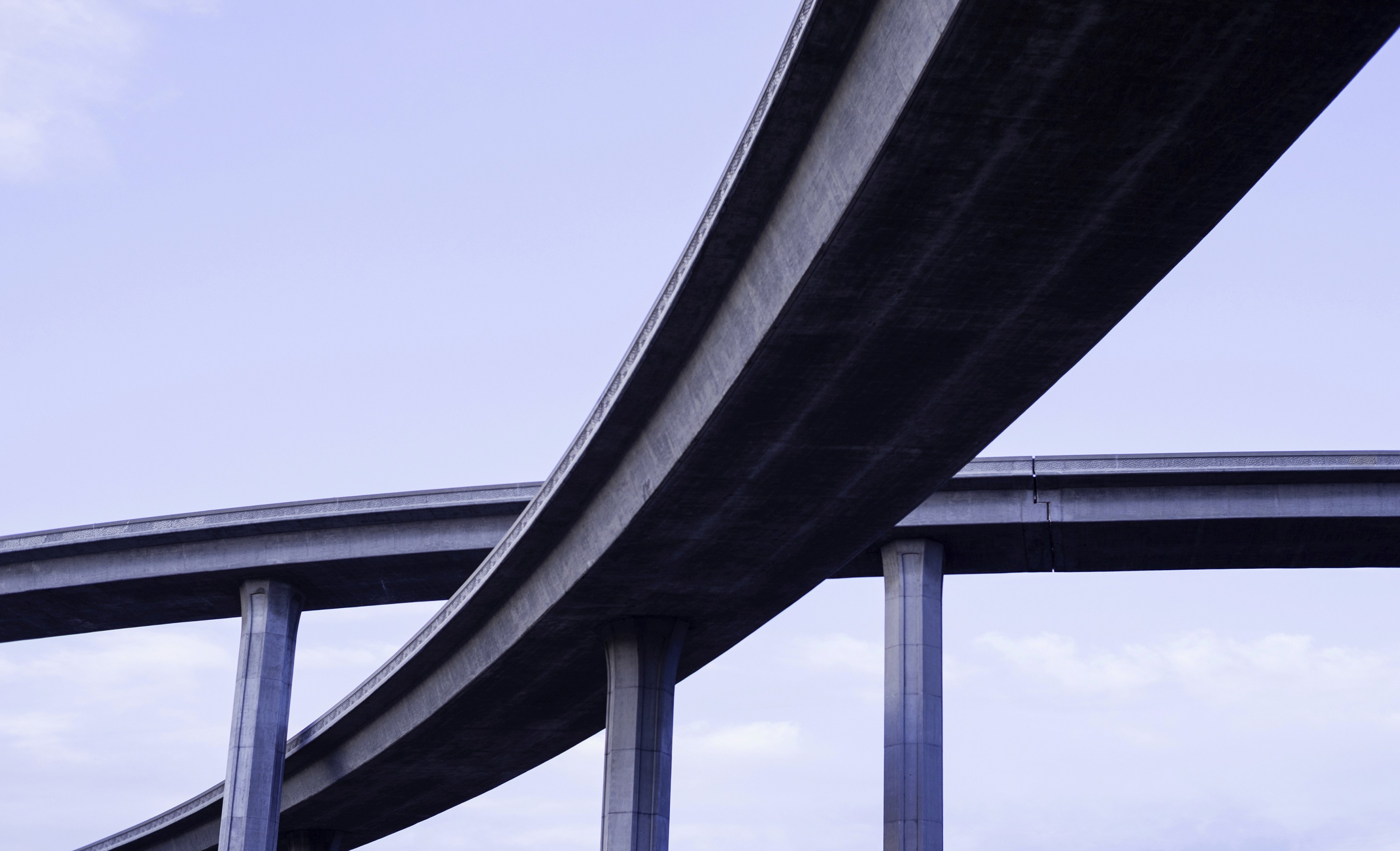
California also taught me the value of fluidity. Skateboarding began in Southern California when surfers looked for a way to bring the feeling of riding waves onto the street. It evolved dramatically in the 1970s when the Z-Boys started skating backyard pools left empty during the drought. Today, a visit to Venice Beach Skatepark still reveals the same instinct at work. Curved concrete. Continuous motion. Forms shaped by movement rather than imposed structure. The freeways tell the same story. Designed for movement, their sweeping curves and elevated forms remain an unintentional civic sculpture.
That way of seeing has always resonated with me. Objects feel most natural when they guide movement rather than interrupt it. Lines carry momentum. Surfaces transition rather than collide. Forms resolve through flow rather than segmentation.
Against that fluidity, California architecture offered something equally important: clarity. The Case Study Houses demonstrated that rigor and openness were not opposites. In Julius Shulman's famous photograph of Case Study House No. 21, a Porsche 356 sits beneath the carport, framed by the architecture itself. Structure, technology, and lifestyle resolved into a single composition. Craig Ellwood understood this particularly well. His buildings at ArtCenter College of Design, where I have taught for more than two decades, are organized as clear graphic systems. Structure provides the framework. Light and atmosphere complete the experience. Complexity can exist beneath the surface. The experience itself should remain clear.
California also provided access to something increasingly rare. Hollywood, aerospace, and car culture created an ecosystem of engineers, fabricators, machinists, and technical specialists unlike almost anywhere else in the world. The instinct here is not merely to imagine ideas, but to build them. To prototype them. To test them. To move them from speculation into reality. Designing in California means designing in proximity to people who understand how things are made, and who expect you to care about the difference.
Perhaps most importantly, California is not a cautious place. It was built on reinvention, on experimentation, and on the belief that things can be made better, bolder, and more joyful than they are today. That spirit is not nostalgia. It remains an operating condition.
Happy Minimalism did not emerge from California alone. Its influences are broad and varied. But it was shaped here, by the light, by the landscape, by the architecture, by the culture of making, and by an enduring belief that simplicity should not feel cold or restrictive. It should feel optimistic.
Optimism, after all, is not a mood. It is a competitive advantage.
En
/
It
"Simplicity should not feel cold or restrictive. It should feel optimistic."
02
The California Phenomenon
En
/
It
"Simplicity should not feel cold or restrictive. It should feel optimistic."
How we design matters. What we design matters. But place shapes design more than we often acknowledge.
California shaped mine.
Southern California's light is unlike light anywhere else. For decades, the region's smog has scattered sunlight across the horizon, turning sunrises and sunsets into gradients of extraordinary color. There is a quiet irony in this: the pollution that clouds Los Angeles also contributes to some of its most beautiful skies. Beauty and complexity are rarely as separate as we assume.
Artists working in the Light and Space movement understood this intuitively. While Minimalism in New York often became harder, colder, and more cerebral, California artists moved in another direction. James Turrell, Robert Irwin, Doug Wheeler, and Larry Bell treated light not as illumination, but as material. Their work was every bit as rigorous as their East Coast counterparts, but the emotional register was different. Generous rather than withholding. Perceptual rather than intellectual. The same instinct toward reduction pointed toward wonder rather than severity. Gradients, diffusion, and atmosphere: those ideas continue to shape how I approach design today.
California also taught me the value of fluidity. Skateboarding began in Southern California when surfers looked for a way to bring the feeling of riding waves onto the street. It evolved dramatically in the 1970s when the Z-Boys started skating backyard pools left empty during the drought. Today, a visit to Venice Beach Skatepark still reveals the same instinct at work. Curved concrete. Continuous motion. Forms shaped by movement rather than imposed structure. The freeways tell the same story. Designed for movement, their sweeping curves and elevated forms remain an unintentional civic sculpture.
That way of seeing has always resonated with me. Objects feel most natural when they guide movement rather than interrupt it. Lines carry momentum. Surfaces transition rather than collide. Forms resolve through flow rather than segmentation.
Against that fluidity, California architecture offered something equally important: clarity. The Case Study Houses demonstrated that rigor and openness were not opposites. In Julius Shulman's famous photograph of Case Study House No. 21, a Porsche 356 sits beneath the carport, framed by the architecture itself. Structure, technology, and lifestyle resolved into a single composition. Craig Ellwood understood this particularly well. His buildings at ArtCenter College of Design, where I have taught for more than two decades, are organized as clear graphic systems. Structure provides the framework. Light and atmosphere complete the experience. Complexity can exist beneath the surface. The experience itself should remain clear.
California also provided access to something increasingly rare. Hollywood, aerospace, and car culture created an ecosystem of engineers, fabricators, machinists, and technical specialists unlike almost anywhere else in the world. The instinct here is not merely to imagine ideas, but to build them. To prototype them. To test them. To move them from speculation into reality. Designing in California means designing in proximity to people who understand how things are made, and who expect you to care about the difference.
Perhaps most importantly, California is not a cautious place. It was built on reinvention, on experimentation, and on the belief that things can be made better, bolder, and more joyful than they are today. That spirit is not nostalgia. It remains an operating condition.
Happy Minimalism did not emerge from California alone. Its influences are broad and varied. But it was shaped here, by the light, by the landscape, by the architecture, by the culture of making, and by an enduring belief that simplicity should not feel cold or restrictive. It should feel optimistic.
Optimism, after all, is not a mood. It is a competitive advantage.
02
The California Phenomenon
En
/
It
"Simplicity should not feel cold or restrictive. It should feel optimistic."
How we design matters. What we design matters. But place shapes design more than we often acknowledge.
California shaped mine.
Southern California's light is unlike light anywhere else. For decades, the region's smog has scattered sunlight across the horizon, turning sunrises and sunsets into gradients of extraordinary color. There is a quiet irony in this: the pollution that clouds Los Angeles also contributes to some of its most beautiful skies. Beauty and complexity are rarely as separate as we assume.
Artists working in the Light and Space movement understood this intuitively. While Minimalism in New York often became harder, colder, and more cerebral, California artists moved in another direction. James Turrell, Robert Irwin, Doug Wheeler, and Larry Bell treated light not as illumination, but as material. Their work was every bit as rigorous as their East Coast counterparts, but the emotional register was different. Generous rather than withholding. Perceptual rather than intellectual. The same instinct toward reduction pointed toward wonder rather than severity. Gradients, diffusion, and atmosphere: those ideas continue to shape how I approach design today.
California also taught me the value of fluidity. Skateboarding began in Southern California when surfers looked for a way to bring the feeling of riding waves onto the street. It evolved dramatically in the 1970s when the Z-Boys started skating backyard pools left empty during the drought. Today, a visit to Venice Beach Skatepark still reveals the same instinct at work. Curved concrete. Continuous motion. Forms shaped by movement rather than imposed structure. The freeways tell the same story. Designed for movement, their sweeping curves and elevated forms remain an unintentional civic sculpture.
That way of seeing has always resonated with me. Objects feel most natural when they guide movement rather than interrupt it. Lines carry momentum. Surfaces transition rather than collide. Forms resolve through flow rather than segmentation.
Against that fluidity, California architecture offered something equally important: clarity. The Case Study Houses demonstrated that rigor and openness were not opposites. In Julius Shulman's famous photograph of Case Study House No. 21, a Porsche 356 sits beneath the carport, framed by the architecture itself. Structure, technology, and lifestyle resolved into a single composition. Craig Ellwood understood this particularly well. His buildings at ArtCenter College of Design, where I have taught for more than two decades, are organized as clear graphic systems. Structure provides the framework. Light and atmosphere complete the experience. Complexity can exist beneath the surface. The experience itself should remain clear.
California also provided access to something increasingly rare. Hollywood, aerospace, and car culture created an ecosystem of engineers, fabricators, machinists, and technical specialists unlike almost anywhere else in the world. The instinct here is not merely to imagine ideas, but to build them. To prototype them. To test them. To move them from speculation into reality. Designing in California means designing in proximity to people who understand how things are made, and who expect you to care about the difference.
Perhaps most importantly, California is not a cautious place. It was built on reinvention, on experimentation, and on the belief that things can be made better, bolder, and more joyful than they are today. That spirit is not nostalgia. It remains an operating condition.
Happy Minimalism did not emerge from California alone. Its influences are broad and varied. But it was shaped here, by the light, by the landscape, by the architecture, by the culture of making, and by an enduring belief that simplicity should not feel cold or restrictive. It should feel optimistic.
Optimism, after all, is not a mood. It is a competitive advantage.
California
/
Milan
© 2026 All rights reserved
© 2026 All rights reserved